
The ‘Hollywood of the UK’ connecting young people to real jobs
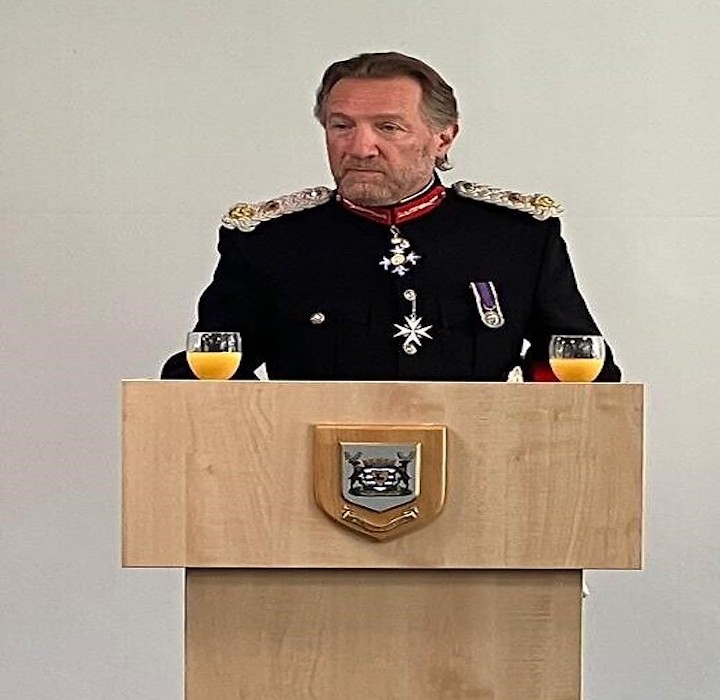

As youth unemployment rises, Hertfordshire’s thriving screen industry is creating thousands of roles and opening new routes into work, says the county’s Lord-Lieutenant, Robert Voss.
Such is the view of business leader Robert Voss, the Lord-Lieutenant of Hertfordshire, who believes too many young people are being steered towards pathways that do not lead to the changing world of work, while demand continues to grow in practical and technical roles.
“Young people are not lazy”, says Voss, 73. “But too often, they are not being guided towards the opportunities that are there.
“Are young people being educated to get jobs, or just being educated for the sake of it?
Too many, he suggests, are encouraged down academic routes that do not necessarily lead to employment, while sectors facing real demand struggle to find people with the right training.
“There are roles that are not going to be taken by AI. We still need people to build houses, install systems… plumbers, electricians, engineers – those jobs are not going away.”
At the same time, the rapid pace of technological change is raising new questions about how young people are prepared for work. “AI will reshape industries but education has yet to fully adapt. You can’t tell students not to use AI. It’s how they use it. The whole system has to change.”
More than 950,000 16 to 24-year-olds in the UK are currently not in education, employment or training – around one in eight.
The government recently announced a new £3,000 grant for employers who hire young people who have been out of work for six months or more, alongside an expansion of existing schemes. Ministers hope the measures will help around 60,000 young people into jobs over the next three years.
But for Voss, the issue is not simply about incentives.
It is about whether young people are being prepared for the jobs that actually exist.
It is this gap that Voss is trying to plug in Hertfordshire.
The county has become one of the UK’s fastest-growing creative hubs, often described as the “Hollywood of the UK and “jewel in the crown” of Britain’s film and television sector.
Major studios including Sky, Warner Bros and Elstree have expanded significantly in recent years, with the wider creative economy, spanning film, television, gaming and design, contributing an estimated £46–£50 billion annually.
The sector already supports around 33,000 jobs in the county, with approximately 2,500 businesses linked specifically to film and television.
Productions ranging from Harry Potter and James Bond to Star Wars, Paddington and Batman have all been filmed in Hertfordshire, underlining its global reach.
“We’re probably producing as much content as Hollywood now,” Voss says.
“This growth presents a clear opportunity: to connect young people with the jobs being created on their doorstep.”
Voss has helped establish initiatives such as Screen Herts, working alongside studios and training providers to create clearer practical pathways into the sector.
“We’re not just talking about film stars or directors,” he says. “We’re talking about the people behind the scenes, from runners to cooks to camera operators to and sound engineers.
“These are roles that are in demand but often overlooked and central to keeping the industry moving.
“It’s win win,” says Voss, who has lived in the county for more than 30 years. He was appointed its Lord-Lieutenant in 2017, a role he will hold until 2028.
Voss lives with his wife Celia. They have three children and two grandchildren.
Hertfordshire’s success, he says, is no accident.
Its proximity to London, strong transport links and access to major airports have made it an attractive base for global studios, while the availability of space and a wide range of filming locations have further strengthened its appeal.
These factors have helped position Hertfordshire as a major creative centre increasingly competing on a global stage.
What is happening in Hertfordshire, Voss suggests, is not just a local success story, but a potential model.
In a county of more than 1.2 million people, with a relatively young population and dozens of schools, the opportunity to connect education directly with industry is clear.
The question, he argues, is whether that approach can be replicated more widely.
Voss’s views are shaped by decades in business.
After graduating in Management Science from Manchester University and Manchester Business School, Voss spent 40 years in the commodities sector, trading internationally across more than 65 countries and running his own company for nearly three decades.
He went on to hold senior leadership roles across the industry, including President of the British Metals Association and President of the European Metal Federation in Brussels, representing the UK in international trade and environmental negotiations.